Definitions

miàn (noun) face; surface; side
miàn (noun) flour; noodles

Etymology

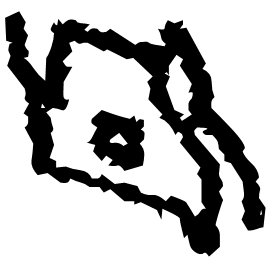
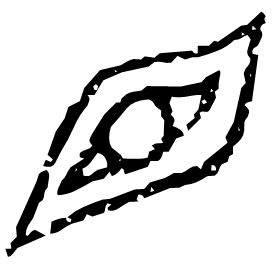
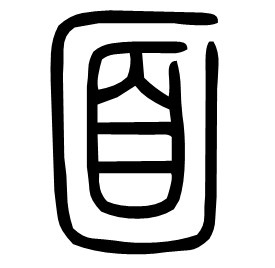
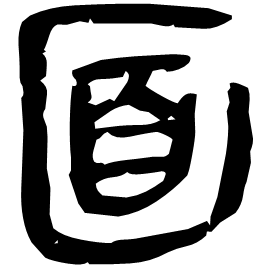
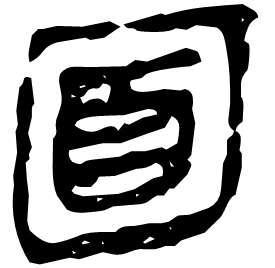
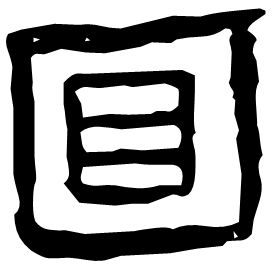
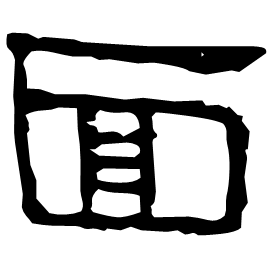
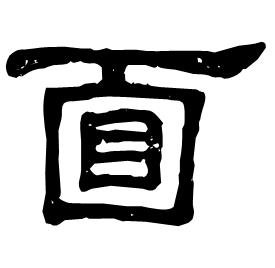
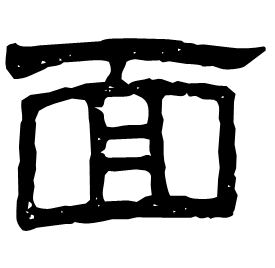
Depicts the outline of a face, with an eye () in the middle. In simplified Chinese is also used to mean "noodles", while in traditional Chinese this meaning is written with a separate character .

About

The character for "面" originated as a pictograph depicting the outline of a face, with a central eye or sometimes additional features, representing the primary meaning of the human face or countenance. In its traditional and more complex form, "麵", the character combined the "face" component with "麥" for wheat, specifically denoting wheat flour and its derivative foodstuffs like noodles, a meaning that was later assigned to the graphically simpler "面" as well. Over time, the semantic scope of "面" expanded metaphorically from the human face to encompass any flat surface or outward aspect of an object, leading to meanings such as the face of a clock, the surface of a table, or the facade of a building. This conceptual extension further evolved into more abstract uses, referring to a personal side or dimension, as in having many sides to one's character, and into a grammatical function as a suffix to indicate an entire scope or area, such as in the words for above, below, or within.

Etymology Hide

Oracle etymology image
Oracle (~1250-1000 BC)
Oracle etymology image
Oracle (~1250-1000 BC)
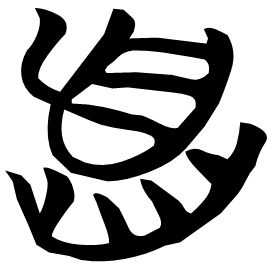
Seal etymology image
Seal Chu (Warring States: 475-221 BC)
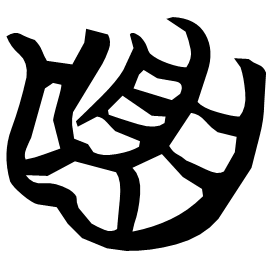
Seal etymology image
Seal Chu (Warring States: 475-221 BC)
Seal etymology image
Seal Shuowen (~100 AD)
Clerical etymology image
Clerical Qin dynasty (221-206 BC)
Clerical etymology image
Clerical Western Han dynasty (202 BC-9 AD)
Clerical etymology image
Clerical Western Han dynasty (202 BC-9 AD)
Clerical etymology image
Clerical Western Han dynasty (202 BC-9 AD)
Clerical etymology image
Clerical Eastern Han dynasty (25-220 AD)
Clerical etymology image
Clerical Eastern Han dynasty (25-220 AD)
Traditional Modern
Simplified Modern

Example Sentences Hide

我爱吃条。

Wǒ ài chī miàntiáo.

I love eating noodles.

我们明天见吧。

Wǒmen míngtiān jiànmiàn ba.

Let's meet tomorrow.

他学习很认真,方都很好。

Tā xuéxí hěn rènzhēn, fāngmiàn dōu hěn hǎo.

He studies very hard and is good in all aspects.

对困难,不要害怕。

Miàn duì kùnnán, bú yào hàipà.

Don't be afraid when facing difficulties.

这个房间的采光很大。

Zhège fángjiān de cǎiguāng miàn hěn dà.

This room has a very large area for natural light.

请你全考虑这个问题。

Qǐng nǐ quánmiàn kǎolǜ zhège wèntí.

Please consider this problem comprehensively.

他在社会上有一定的子。

Tā zài shèhuì shàng yǒu yīdìng de miànzi.

He has a certain amount of prestige in society.

这本书从哲学层进行了分析。

Zhè běn shū cóng zhéxué céngmiàn jìnxíngle fēnxī.

This book provides an analysis from a philosophical level.