About
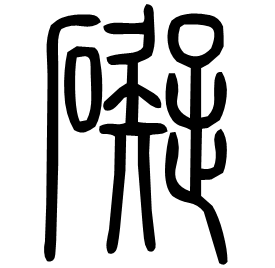
碍 is the simplified form of 礙, a phonosemantic compound: 石 (shí) 'stone' on the left suggests a physical obstruction, while 㝵 (dé) on the right gives the sound (the traditional character used 疑 yí as its phonetic). The core meaning is an obstacle or hindrance, originally a rock blocking the way, and by extension any abstract barrier, delay, or interference.
Etymology Hide
Example Sentences Hide
请你别碍事。
不要妨碍我。
这本书很碍地方。
路上有障碍。
他的行为妨碍了进展。
克服障碍才能成功。
这种政策可能会妨碍经济发展。
尽管存在许多障碍,他们仍然坚持完成了项目。
Report an issue
Flag incorrect definitions, examples, etymology, etc.