About
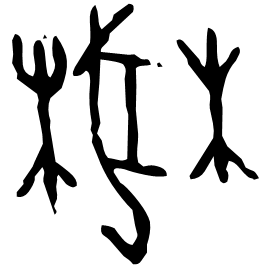
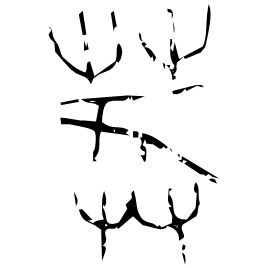
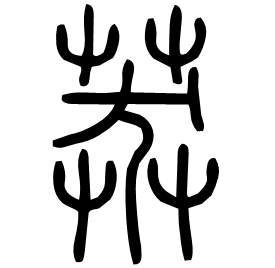
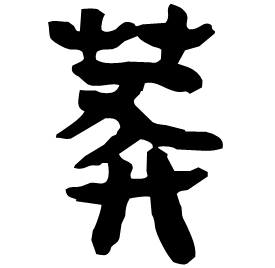
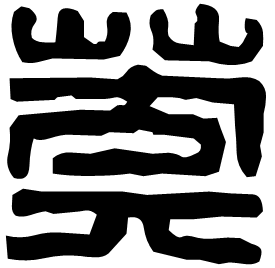
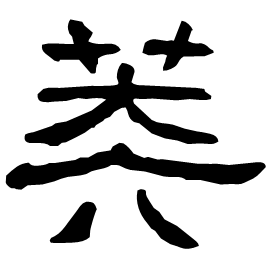
The character 莽 is formed with the grass radical 艹 above and the component 廾 below; together, these derive from the ancient weed radical 茻, representing dense, tangled vegetation. At the center lies 犬 (dog). Originally, this depicted a dog within overgrown weeds, yielding the meaning of a dense wilderness or jungle. Over time, this image of untamed nature extended metaphorically to reckless, rough, or impulsive human behavior.
Etymology Hide
Example Sentences Hide
这个人的性格很莽撞。
他莽撞地冲进了房间。
做事不要这么鲁莽。
他为自己年轻时的莽撞道歉。
一片莽原在眼前展开。
历史的莽莽洪流不可阻挡。
这篇小说充满草莽英雄的气息。
深入这片莽苍的山林需要勇气。
Report an issue
Flag incorrect definitions, examples, etymology, etc.