Definitions

nài (particle) how can one help ; what can be done

Etymology

A man  with spirit 

About

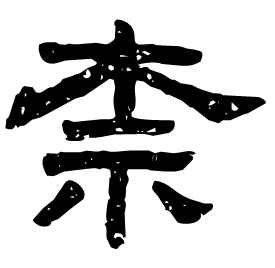
The character "奈" originated as a form representing a ritual or sacrificial context, with its structure in the traditional seal script analysis combining the element for "big" (大) over the element for "altar" or "to show" (示), implying an act of great display or offering to spiritual forces. This inherent sense of dealing with momentous or divine matters gradually shifted toward conveying a meaning of something that must be endured or accepted, leading to its primary function as a grammatical particle expressing a sense of "how can it be helped?" or "what is to be done?". Over time, its usage became fixed in classical and modern Chinese to form words expressing helpless resignation, such as "无奈" (having no alternative), where it serves to articulate inevitable circumstances or unchangeable facts, moving far from its original concrete ritual associations while retaining a core idea of confronting forces beyond one's control.

Etymology Hide

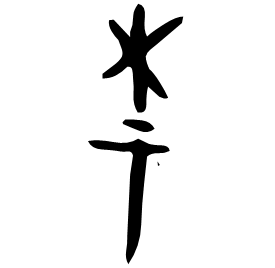
Oracle etymology image
Oracle (~1250-1000 BC)
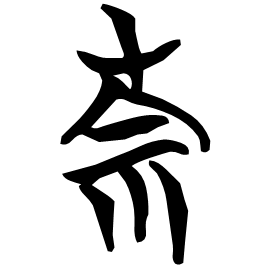
Seal etymology image
Seal Chu (Warring States: 475-221 BC)
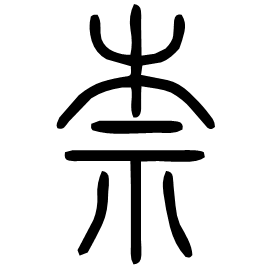
Seal etymology image
Seal Shuowen (~100 AD)
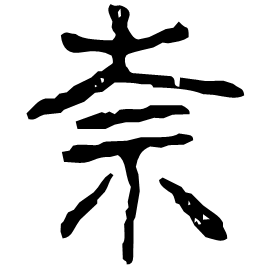
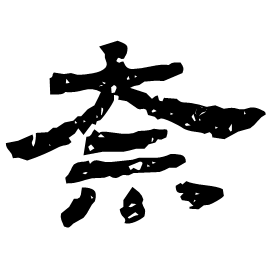
Clerical etymology image
Clerical Western Han dynasty (202 BC-9 AD)
Clerical etymology image
Clerical Eastern Han dynasty (25-220 AD)
Clerical etymology image
Clerical Eastern Han dynasty (25-220 AD)
Traditional Modern
Simplified Modern

Example Sentences Hide

他感到非常无

Tā gǎndào fēicháng wúnài.

He feels very helpless.

何不了我。

Nǐ nàihé bù liǎo wǒ.

You can't do anything to me.

我无地摇摇头。

Wǒ wúnài de yáo yáo tóu.

I shook my head helplessly.

良是日本的城市。

Nàiliáng shì Rìběn de chéngshì.

Nara is a city in Japan.

面对这种情况,他感到无

Miànduì zhè zhǒng qíngkuàng, tā gǎndào wúnài.

Facing this situation, he felt helpless.

无论你怎么说,我都无接受。

Wúlùn nǐ zěnme shuō, wǒ dōu wúnài jiēshòu.

No matter what you say, I have to accept it helplessly.

何事情已经发生,无法改变。

Nàihé shìqing yǐjīng fāshēng, wúfǎ gǎibiàn.

Unfortunately, things have already happened and cannot be changed.

即便有再多的无,生活也要继续。

Jíbiàn yǒu zài duō de wúnài, shēnghuó yě yào jìxù.

Even if there is so much helplessness, life must go on.