About
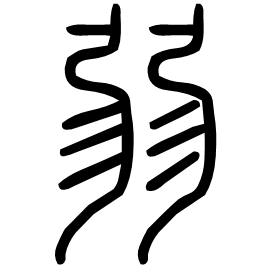
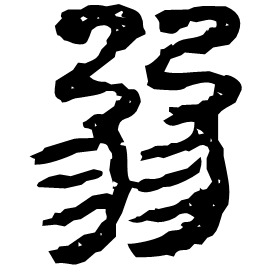
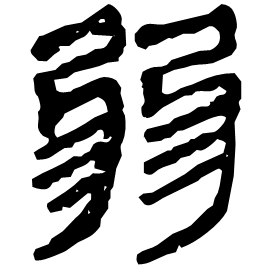
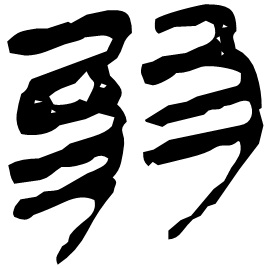
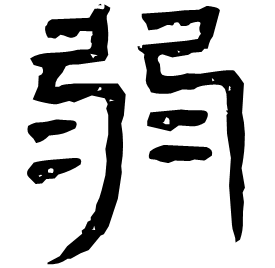
The character "弱" (weak), which remains identical in both traditional and simplified scripts, is composed of two "弓" (gōng, bow) elements alongside two sets of strokes representing feathers or hanging tassels, suggesting a structure of two flimsy bows. Etymologically, this visual pairing of bows is thought to depict something fragile or pliant, as a single weak bow would be inadequate, so two are used to emphasize this inherent lack of strength. Over time, its core meaning, initially suggesting physical fragility or a lack of force, expanded significantly into abstract and moral domains. It came to describe not just delicate objects or feeble bodies, but also timid dispositions, inferior ability, and by extension, things that are young or immature, as in "弱冠" for a young man, or a state that is vulnerable, as in "弱小". This semantic broadening allowed the character to maintain its fundamental sense of deficiency while applying it to an increasingly wide range of human conditions and qualities.
Etymology Hide
Example Sentences Hide
她的身体很弱。
这是我的一个弱点。
婴儿的骨骼非常脆弱。
光线在逐渐减弱。
我们要帮助弱势群体。
这场雨势并没有减弱的迹象。
他的论点论据不足,显得很薄弱。
在自然界,弱肉强食是基本法则之一。