Definitions

(literary) (final particle similar to 嗎|吗[ma], 呢[ne] or 啊[ā])

Etymology phono-semantic

lack

Semantic: Phonetic:

About

The character "欤", derived from its traditional form "歟", functions as a sentence-final particle in classical Chinese to denote questions or exclamations, with its structural composition in the traditional form combining the phonetic component "與" and the semantic element "欠", the latter associated with breath or utterance. The simplified form "欤" substitutes "與" with "与" as the phonetic part while retaining "欠", thus modifying the character's graphic representation without altering its core grammatical role. Over time, the usage of "欤" has shifted from frequent employment in classical texts to more limited application in modern literary or formal contexts, where it continues to operate as an interrogative or exclamatory marker.

Etymology Hide

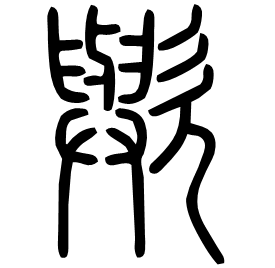
Seal etymology image
Seal Shuowen (~100 AD)
Traditional Modern
Simplified Modern

Example Sentences Hide

这是你的书

Zhè shì nǐ de shū yú?

Is this your book?

你愿意帮忙

Nǐ yuànyì bāngmáng yú?

Are you willing to help?

他今天来学校

Tā jīntiān lái xuéxiào yú?

Is he coming to school today?

我们可以回家

Wǒmen kěyǐ huí jiā yú?

Can we go home?

此事确实重要

Cǐ shì quèshí zhòngyào yú?

Is this matter really important?

你为何选择离开

Nǐ wèihé xuǎnzé líkāi yú?

Why did you choose to leave?

天气如此恶劣,你还要外出

Tiānqì rúcǐ èliè, nǐ hái yào wàichū yú?

The weather is so bad, are you still going out?

面对重重困难,我们不应放弃希望

Miànduì chóngchóng kùnnán, wǒmen bù yīng fàngqì xīwàng yú?

Facing numerous difficulties, shouldn't we give up hope?