Definitions

shēn (verb) to stretch; to extend

Etymology

To extend your confidence  to another person  also provides the pronunciation

About

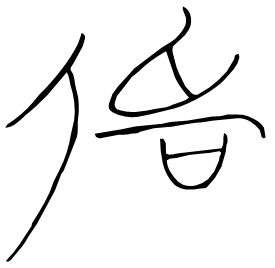
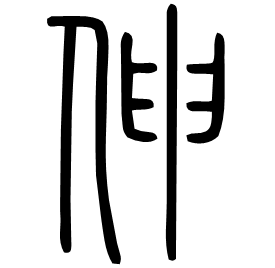
The character 伸, representing the action to stretch or extend, is constructed as a phono-semantic compound with the radical 亻 for person and the component 申, which serves as both sound clue and meaning contributor related to extension. This combination originally denoted the physical act of a person stretching their body or limbs, drawing from 申's inherent sense of elongation. Throughout its historical usage, the character has preserved this primary meaning while gradually acquiring additional figurative applications, such as extending non-physical things like time or influence, and expressing ideas or emotions, thus reflecting a semantic broadening from concrete to abstract contexts without fundamental alteration to its form or core conception.

Etymology Hide

Bronze etymology image
Bronze Late Warring States (~250 BC)
Seal etymology image
Seal Shuowen (~100 AD)
Traditional Modern
Simplified Modern

Example Sentences Hide

出了手。

Ta shen chu le shou.

He stretched out his hand.

小猫了个懒腰。

Xiao mao shen le ge lan yao.

The kitten stretched.

展双臂。

Ta shen zhan shuang bi.

She stretched her arms.

哥哥手拿苹果。

Ge ge shen shou na ping guo.

Big brother reached out to take the apple.

运动员在比赛前展身体。

Yun dong yuan zai bi sai qian shen zhan shen ti.

The athlete stretched his body before the competition.

植物藤蔓向阳光展。

Zhi wu teng man xiang yang guang shen zhan.

The plant vines stretched towards the sunlight.

张正义,帮助了很多人。

Ta shen zhang zheng yi, bang zhu le hen duo ren.

He upheld justice and helped many people.

在困境中,他始终出援手。

Zai kun jing zhong, ta shi zhong shen chu yuan shou.

In difficult times, he always extended a helping hand.