About
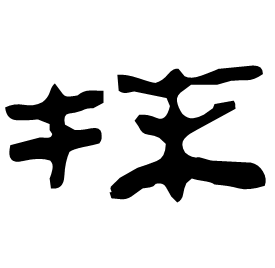
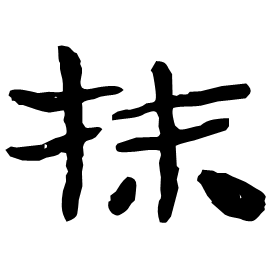
抹 is a phono-semantic compound. The left component 扌 (a reduced form of 手 'hand') indicates an action performed with the hand, while the right component 末 (mò) provides the sound and originally meant 'tip of a branch'. Its primary meaning involves wiping, smearing, applying, or rubbing a substance onto a surface, as in spreading mortar on a wall or applying cosmetics to a face. Depending on its pronunciation and context, it can also mean crossing out, erasing, or removing something entirely, similar to wiping a surface clean. The combination of the hand radical and the phonetic captures the sweeping or rubbing motion common to both applying and wiping away.
Etymology Hide
Example Sentences Hide
我用抹布擦桌子。
他在墙上涂抹颜料。
请抹掉黑板上的字。
我喜欢喝抹茶拿铁。
我们不能抹杀他的功劳。
不要抹黑别人的名声。
时间抹不去美好的回忆。
她用精致的抹刀涂抹奶油。
Report an issue
Flag incorrect definitions, examples, etymology, etc.