About
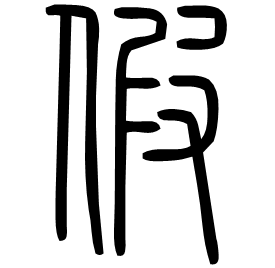
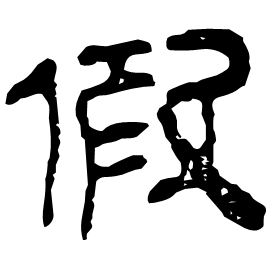
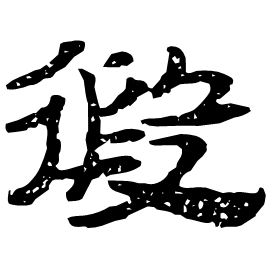
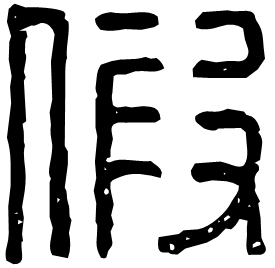
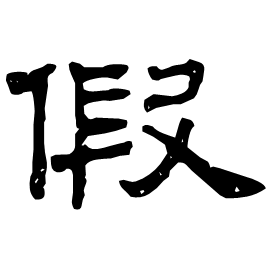
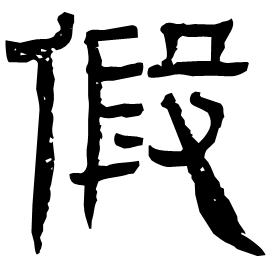
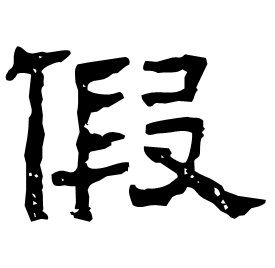
The character 假 is formed with the person radical 亻 on the left and the component 叚 on the right, which provides the pronunciation. Its original meaning was the act of borrowing, taking something temporarily rather than owning it permanently. Over time, the concept of something temporary and not truly owned shifted to denote 'false, artificial, or fake' (jiǎ). Additionally, the notion of a temporary leave, a borrowed break from regular labor, led to the alternative reading jià, meaning holiday, vacation, or leave of absence.
Etymology Hide
Example Sentences Hide
这是一个假苹果。
他请假去旅行。
她假装很开心。
暑假我们去了海边。
假设明天不下雨,我们就去公园。
这条新闻是虚假的。
他利用假期学习新技能。
尽管那是假钻石,但看起来非常逼真。
Report an issue
Flag incorrect definitions, examples, etymology, etc.